24/11/2026
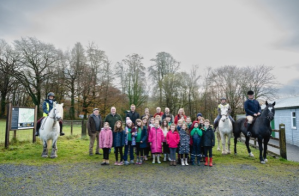 The first dedicated multi-user trail of its kind in Carmarthenshire has been re-launched following a programme of improvements, enhancing accessibility and opportunities for horse riders, walkers and cyclists to enjoy the countryside of north Carmarthenshire. The Cothi Trail was re-launched on 19 November at an event attended by representatives from Carmarthenshire County Council, Welsh Government, Natural Resources Wales, the National Trust, the British Horse Society, local user groups and pupils from Ysgol Talley.
Linking the historic villages of Caio and Pumsaint, the family-friendly trail provides dedicated multi-user access for horse riders, walkers and cyclists, enabling more people to enjoy the area's natural beauty and rich heritage. Funded through a £20,000 Welsh Government Access Improvement Grant (AIG), the project supports the ambitions of Carmarthenshire County Council's Equestrian Strategy, published earlier this year, which aims to improve and expand equestrian access opportunities across the county.
To support the re-launch of the trail, a programme of improvements has been undertaken, including route enhancements, upgraded infrastructure, renewed waymarking and new interpretation features, helping to improve the overall experience for horse riders, walkers and cyclists.
Read More >
16/11/2026
 I am setting out the Welsh Government's approach to improving transport accessibility for blind and partially sighted people in Wales. This supports the ambition in Travel for All, our plan for improving transport accessibility, to create an integrated and inclusive transport system that enables everyone to travel safely, confidently and independently. It also reflects our wider commitment to ensure that accessibility is considered from the outset in transport policy, design and delivery. We have already taken important steps towards that ambition.
The Active Travel Act Guidance sets out how local authorities should plan, design and deliver walking, wheeling and cycling routes. The newly revised national guidance sets clearer expectations for inclusive design and delivery across Wales. Its development has been informed by engagement with disabled people and representative organisations, including co-design and in-person discussions. We will work with partners at the regional and local level on consistent application of the guidance to ensure it makes a practical difference to people's everyday journeys, including delivering inclusive engagement training. We are also considering how to address pavement parking. I am discussing with the Welsh Local Government Association how local authorities could be given greater powers to tackle this issue. Obstructed pavements can prevent independent travel and force blind, partially sighted and other vulnerable pedestrians into the road. Alongside enforcement, there is a need to improve understanding of the serious consequences pavement obstruction can have. Our continued engagement with RNIB Cymru, Guide Dogs and blind and partially sighted people is helping to shape our work on transport accessibility. While the Welsh Government’s commitment to a more integrated and inclusive transport system has been welcomed, representatives of the blind and partially sighted community are rightly challenging government and delivery partners to turn national ambition into visible improvements. We know there is more to do on this. Our priorities are to strengthen inclusive design capability, improve how lived experience informs decisions, and ensure that accessibility is addressed consistently from policy development through to local delivery.
We will consider how learning from inclusive-design work can be extended across local authorities. We will also work with RNIB Cymru to strengthen routes for engagement with Corporate Joint Committees and support accessible, meaningful local consultation informed by Equality Impact Assessments and local lived experience. Safety and inclusion must be central as schemes are designed and delivered. The planned new Burns stations will provide a further opportunity for RNIB Cymru and people with lived experience to contribute at an early stage. Their involvement will help inform accessibility as the stations are designed and delivered, rather than seeking to address barriers later. Refreshing the Wales Transport Strategy is a Programme for Government commitment. The refresh provides an opportunity to bring these strands together and embed the principles of Travel for All across the transport system, informed by continued engagement with disabled people and representative organisations. I am grateful for the insight and challenge provided by RNIB Cymru, Guide Dogs and people with lived experience. Working with them, local authorities, Transport for Wales and other partners, our focus will remain on making accessibility a consistent part of transport decision-making and delivery across Wales.
Read More >
10/11/2026
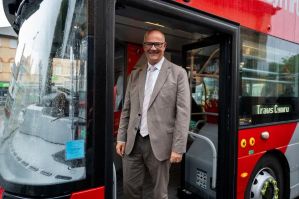 Temporary targeted support to help bus, school and community transport services across Wales cope with exceptional rises in fuel costs has been announced today.
£7 million to be distributed through local authorities, to help protect essential services in 2026-7. The scheme recognises the significant pressures that exceptionally high and volatile fuel costs are placing on bus operators, school transport providers and community transport services across Wales.
The £7 million Bus Services Support Grant (BSSG) Plus scheme, funded by the Welsh Government, will not only help essential services through this exceptional period of fuel-cost pressures, but also protect passengers from fare increases.
Read More >
